
Introduction: Expanded Polystyrene in Qatar Construction
Expanded polystyrene (EPS) foam is the most widely used rigid insulation material in Qatar’s construction industry. From residential villas to commercial towers, expanded polystyrene delivers cost-effective thermal insulation that reduces cooling energy consumption by 40-60% while maintaining structural integrity in extreme desert conditions.
At Insugreen, we’ve installed thousands of square meters of expanded polystyrene foam across Qatar, achieving verified energy savings and building performance improvements. This comprehensive guide explains everything about expanded polystyrene: what it is, how it performs, where it’s used, and why EPS foam remains the optimal choice for most Qatar insulation applications.
Whether you’re planning new construction or retrofitting an existing building, understanding expanded polystyrene properties and applications ensures you select the right insulation solution for maximum performance and value.
What is Expanded Polystyrene (EPS) Foam?
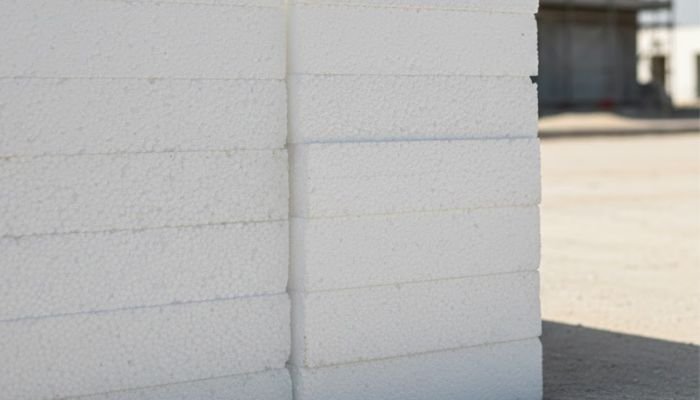
Expanded polystyrene is a lightweight, closed-cell foam plastic manufactured from polystyrene beads. The manufacturing process expands these beads 40-50 times their original size using steam and pressure, creating a rigid foam composed of 98% air and 2% polystyrene.
Key Characteristics of Expanded Polystyrene:
Material Composition: Polystyrene polymer (C8H8)n expanded into closed-cell structure. Each EPS foam bead is a sealed air pocket providing thermal resistance.
Density Range: 10-35 kg/m³ for construction applications. Higher density expanded polystyrene provides greater compressive strength and thermal performance.
Thermal Performance: R-value of 3.6-4.5 per inch (25mm) depending on density. Expanded polystyrene maintains consistent insulation value across Qatar’s temperature range.
Moisture Resistance: Closed-cell structure resists water absorption. EPS foam absorbs less than 3% water by volume even with prolonged immersion.
Dimensional Stability: Expanded polystyrene maintains size and shape from -50°C to +75°C, well beyond Qatar’s climate extremes.
Compressive Strength: 70-200 k Pa depending on density, sufficient for wall and under-slab applications.
Unlike spray foam which must be applied on-site, expanded polystyrene arrives as pre-manufactured rigid boards, ensuring consistent quality and easier installation. This makes EPS foam ideal for EIFS installation and other building envelope applications.
Expanded Polystyrene vs. Other Foam Insulation Types
Expanded Polystyrene (EPS) vs. Extruded Polystyrene (XPS)
Both are polystyrene foams but manufactured differently:
Expanded Polystyrene (EPS): Beads expanded with steam, creating open structure between beads. Lower density (10-35 kg/m³), lower cost, R-3.6-4.5 per inch, white or grey color, breathable (allows vapor diffusion).
Extruded Polystyrene (XPS): Continuous extrusion process creating uniform closed-cell structure. Higher density (28-45 kg/m³), higher cost, R-5.0 per inch, blue/pink/green color, vapor barrier properties.
For Qatar Applications: Expanded polystyrene is preferred for above-grade wall insulation due to breathability (prevents moisture accumulation), lower cost (30-40% less than XPS), and adequate performance (R-4.0+ meets Qatar requirements). XPS is reserved for below-grade or high-moisture applications where its superior moisture resistance justifies higher cost.
Expanded Polystyrene vs. Spray Foam
Spray foam insulation and expanded polystyrene serve different applications:
EPS Foam Advantages: Pre-manufactured consistency (no on-site mixing variables), lower installed cost (40-50% less than spray foam), easy quality verification (inspect boards before installation), removable and recyclable.
Spray Foam Advantages: Fills irregular cavities, creates air seal, higher R-value per inch (R-6.0-7.0 for closed-cell).
Optimal Use: Expanded polystyrene for flat wall surfaces and external wall insulation. Spray foam for roof decks and irregular surfaces. Combining both maximizes building performance.
Expanded Polystyrene vs. Polyurethane Boards
Rigid polyurethane foam boards offer higher R-value (R-6.0-7.0 per inch) but cost significantly more than expanded polystyrene.
Cost Comparison: EPS foam costs 35-60 QAR/m² installed. Polyurethane boards cost 80-140 QAR/m². For wall applications requiring R-15 to R-20, expanded polystyrene achieves target performance at half the cost of polyurethane.
When to Choose Polyurethane: Space-constrained applications where thinner insulation is essential. For most Qatar wall applications, expanded polystyrene thickness is not constrained, making EPS foam the economical choice.
Expanded Polystyrene Applications in Qatar Buildings
Application 1: EIFS External Wall Insulation
The most common use of expanded polystyrene in Qatar is EIFS systems (External Insulation and Finishing System). EPS foam boards are adhered to exterior walls, then covered with reinforced base coat and decorative finish.
Typical Specification:
- EPS foam density: 15-20 kg/m³
- Board thickness: 50-100mm (most common: 75mm)
- R-value achieved: R-12 to R-16
- Complete system cost: 120-180 QAR/m²
Performance Benefits:
- Reduces wall heat gain by 75-85%
- Eliminates thermal bridging through concrete structure
- Provides weather protection and aesthetic upgrade
- System lifespan: 25-40 years
Energy Savings: A villa with 280m² wall area insulated with 75mm expanded polystyrene typically saves 4,500-6,000 QAR annually in cooling costs.
For complete installation details, see our EIFS installation guide.
Application 2: Internal Wall Insulation
When external insulation isn’t feasible (heritage facades, shared walls), expanded polystyrene can be installed internally.
Installation Method: EPS foam boards adhered to interior wall surface, covered with gypsum board or plaster finish. Typical thickness 50-75mm to minimize loss of interior space.
Considerations:
- Reduces room dimensions by board thickness plus finish
- Requires careful vapor barrier detailing
- Electrical boxes and fixtures need relocation
- Less effective than external insulation (doesn’t eliminate thermal bridges)
Best for: Individual apartments in multi-unit buildings, buildings with protected facades, retrofit projects where external work is not permitted.
Application 3: Roof Deck Insulation
Expanded polystyrene boards can insulate flat concrete roof decks, though spray foam is generally preferred for this application.
EPS Roof Insulation Details:
- High-density EPS foam (25-35 kg/m³) required for foot traffic
- Boards installed over concrete deck
- Protected by waterproof membrane and ballast or pavers
- Thickness: 100-150mm for R-16 to R-24
Advantages: Lower cost than spray foam, easy repair and replacement.
Disadvantages: Requires separate air sealing, multiple layers needed for thick insulation, potential for gaps between boards.
Verdict: For roof insulation in Qatar, spray foam’s superior air sealing and higher R-value justify the cost premium. Use expanded polystyrene for roofs when budget is constrained or when board system is specified for other reasons.
Application 4: Foundation and Perimeter Insulation
Expanded polystyrene insulates building foundations and perimeter walls below grade.
Application Details:
- EPS foam boards installed on exterior of foundation wall
- Protects waterproofing membrane
- Reduces heat transfer from ground
- Typical thickness: 50-75mm
Benefits: Prevents thermal bridging at foundation-wall junction, protects waterproofing from thermal stress and physical damage, maintains foundation temperature closer to conditioned space.
In Qatar’s climate, foundation insulation is less critical than wall and roof insulation, but still provides 5-10% additional energy savings when included in comprehensive insulation strategy.
Application 5: Under-Slab Insulation
For ground-floor slabs, expanded polystyrene can be installed below the concrete to reduce ground heat transfer.
Installation: High-density EPS foam (minimum 20 kg/m³) placed on compacted sub-base, concrete slab poured directly on EPS foam boards, typical thickness 50-75mm.
Performance: Reduces heat gain through slab by 60-80%, maintains floor surface temperature closer to air temperature, reduces cooling load in ground-floor spaces.
Cost-Benefit: Under-slab insulation adds 30-50 QAR/m² to construction cost. Energy savings are modest (10-15% of ground floor cooling costs) but thermal comfort improvement is significant.
Recommendation: Include under-slab expanded polystyrene in new construction for sustainable building performance. Less economical to retrofit in existing buildings.
Expanded Polystyrene Density and Performance
EPS foam is manufactured in different densities for different applications. Understanding density-performance relationship is critical for proper specification.
EPS Density Classifications
Type I (10-15 kg/m³):
- Thermal resistance: R-3.6 to R-3.8 per inch
- Compressive strength: 40-70 k Pa
- Applications: Non-load-bearing wall insulation, decorative elements
- Lowest cost option
Type II (15-20 kg/m³):
- Thermal resistance: R-3.8 to R-4.2 per inch
- Compressive strength: 70-100 k Pa
- Applications: Standard EIFS wall insulation, above-grade applications
- Best cost-performance balance for walls
Type VIII (20-25 kg/m³):
- Thermal resistance: R-4.2 to R-4.4 per inch
- Compressive strength: 100-135 k Pa
- Applications: High-traffic roofs, under-slab insulation
- Moderate premium over Type II
Type IX (25-35 kg/m³):
- Thermal resistance: R-4.4 to R-4.5 per inch
- Compressive strength: 135-200 k Pa
- Applications: Heavy-load applications, parking decks, plaza decks
- Highest cost but maximum strength
Selecting Correct EPS Density
For EIFS Wall Systems: Type II (15-20 kg/m³) is standard. Provides adequate strength for wall application while optimizing thermal performance and cost. Higher density adds cost without significant benefit for vertical applications.
For Roof Insulation: Type VIII or IX (20-35 kg/m³) depending on roof traffic and loads. Must support maintenance workers and equipment without compression.
For Under-Slab: Type VIII minimum (20 kg/m³). Must support concrete weight and any structural loads without excessive compression.
For Foundation Walls: Type II adequate (15-20 kg/m³). No significant load-bearing requirement.
Expanded Polystyrene Board Sizes and Specifications
Standard Board Dimensions
Width × Length: 600mm × 1200mm (most common), 1000mm × 1000mm, 1000mm × 2000mm (available for larger projects).
Thickness Range: 20mm to 300mm in 10mm increments. Custom thicknesses available.
Edge Profiles: Square edge (standard), tongue-and-groove (reduces thermal bridging), ship-lap edge (easier installation).
Common Thickness Specifications for Qatar
50mm (2 inches): R-8 thermal resistance. Minimum for wall insulation, suitable for mild climate zones, budget-constrained projects.
75mm (3 inches): R-12 thermal resistance. Standard for Qatar residential walls, optimal cost-performance for typical villas, most common EIFS specification.
100mm (4 inches): R-16 thermal resistance. Commercial buildings, high-performance homes, buildings targeting GSAS/LEED certification.
150mm (6 inches): R-24 thermal resistance. Roof applications, extreme performance requirements, cold storage facilities.
Material Specifications
Flame Retardancy: All expanded polystyrene for building use must contain flame retardant additives. Specify ASTM E84 Class A or Class 1 flame spread rating.
Dimensional Tolerance: ±2mm on thickness, ±3mm on length/width for quality EPS foam boards.
Density Tolerance: ±10% of nominal density (e.g., 18±1.8 kg/m³ for nominal 18 kg/m³).
Thermal Conductivity: Maximum 0.036 W/(m·K) at 10°C mean temperature for Type II expanded polystyrene.
Environmental and Health Aspects of Expanded Polystyrene
Environmental Profile
Recyclability: Expanded polystyrene is 100% recyclable. EPS foam waste can be densified and reformed into new boards or other plastic products.
Manufacturing Impact: EPS production uses less energy than most insulation alternatives. No CFCs or HCFCs used in modern expanded polystyrene manufacturing.
Service Life Impact: Long service life (50+ years) means one-time manufacturing impact is amortized over decades of energy savings.
End-of-Life: Expanded polystyrene can be recycled, reused as fill material, or thermally recovered (energy from waste). Not biodegradable but chemically stable (won’t leach harmful substances).
Health and Safety
Toxicity: Expanded polystyrene is inert and non-toxic. Safe for residential use with no off-gassing concerns.
Fire Performance: EPS foam contains flame retardants but is combustible. Must be protected by fire-rated coverings (cement board, gypsum board, EIFS finish coats) per building codes.
Installation Safety: No special respiratory protection needed for EPS foam installation. Standard dust masks sufficient if cutting creates particles.
Indoor Air Quality: Expanded polystyrene does not support mold growth, does not emit VOCs, does not attract pests.
Expanded Polystyrene Installation Best Practices
Surface Preparation
Substrate Requirements: Clean, dry, structurally sound surface. Remove all loose material, dust, oil, or contaminants. Fill major voids or irregularities.
Moisture Control: Substrate moisture content below 6% by weight. New concrete must cure minimum 28 days before EPS foam installation.
Primer Application: Prime highly porous or dusty surfaces to improve adhesive bond.
Adhesive Application
Adhesive Type: Polymer-modified cement adhesive specifically formulated for expanded polystyrene. Never use solvent-based adhesives (dissolves EPS foam).
Application Pattern: Ribbon-and-spot method. Continuous ribbons around board perimeter plus 5-6 spots in center. Provides 40-60% coverage.
Coverage Requirements: Minimum 40% contact area between EPS foam and substrate. Full contact achieved when boards are pressed to wall.
Curing Time: Allow adhesive to reach initial set (2-4 hours) before applying mechanical fasteners.
Mechanical Fastening
Fastener Type: Plastic plate fasteners with galvanized or stainless steel screws driven into concrete/masonry substrate.
Fastener Density: Minimum 4-6 fasteners per 600mm × 1200mm board. Increase at edges, corners, and high-wind exposure areas.
Fastener Depth: Drive flush with EPS foam surface. Over-driving compresses foam and creates dimples.
Fastener Pattern: Distribute evenly across board to prevent deformation.
Joint Treatment
Board Fit: Maximum 3mm gap between expanded polystyrene boards. Cut boards accurately to achieve tight fit.
Gap Filling: Fill gaps over 6mm with EPS foam adhesive or compatible sealant. Never stuff with loose foam scraps.
Joint Pattern: Stagger joints in running bond pattern like brickwork. Avoid four-corner joints.
Corner Details: Use full boards at corners. Interlock boards at inside and outside corners for maximum strength.
Expanded Polystyrene Cost Analysis
Material Costs (Qatar Market)
Type II EPS Foam (15-20 kg/m³):
- 50mm thick: 12-18 QAR/m²
- 75mm thick: 18-27 QAR/m²
- 100mm thick: 24-36 QAR/m²
Type VIII EPS Foam (20-25 kg/m³):
- 50mm thick: 18-25 QAR/m²
- 75mm thick: 27-38 QAR/m²
- 100mm thick: 36-50 QAR/m²
Installation Materials:
- Adhesive: 8-12 QAR/m²
- Mechanical fasteners: 4-6 QAR/m²
- Total materials: 30-50 QAR/m² for typical wall installation
Installed Cost Comparison
EPS Foam Wall Insulation Only: 35-60 QAR/m² (boards, adhesive, fasteners, labor)
Complete EIFS System: 120-180 QAR/m² (EPS foam insulation plus base coat, mesh, finish coat)
Cost vs. Performance: For R-12 thermal resistance (75mm Type II), expanded polystyrene costs 35-45 QAR/m² installed. Spray foam achieving same R-value costs 85-110 QAR/m². EPS foam delivers equivalent thermal performance at 50-60% lower cost for wall applications.
Long-Term Performance and Durability
Thermal Performance Stability
R-Value Retention: Expanded polystyrene maintains rated R-value indefinitely. Unlike some foam types, EPS does not experience thermal drift or gas loss over time.
Temperature Cycling: EPS foam withstands Qatar’s daily temperature cycling (20-25°C variation) without degradation. Testing shows no performance loss after 100+ thermal cycles.
UV Resistance: Expanded polystyrene degrades under direct UV exposure. Must be protected by cladding, render, or finish coat. When properly covered, service life exceeds 50 years.
Moisture and Weathering
Water Absorption: EPS foam absorbs less than 3% water by volume even with prolonged immersion. Capillary absorption between beads is minimal.
Freeze-Thaw: Not relevant in Qatar, but expanded polystyrene withstands 100+ freeze-thaw cycles without damage in cold climates.
Dimensional Stability: Expanded polystyrene does not shrink, warp, or settle over time. Maintains full coverage without gaps developing.
Structural Integrity
Compressive Strength Retention: EPS foam maintains compressive strength indefinitely under normal building loads.
Impact Resistance: Lower density expanded polystyrene is relatively soft and vulnerable to impact damage during construction. Must be protected during building process and covered with durable finish.
Fire Performance: Expanded polystyrene with flame retardants meets building code requirements when properly protected. Must be covered with fire-rated materials (cement coatings, gypsum board).
Integration with Other Building Systems
Expanded Polystyrene in Complete Building Envelope
Optimal Strategy: Combine EPS foam wall insulation with spray foam roof insulation for complete building envelope. Each material optimized for its application.
Wall System: 75-100mm expanded polystyrene in EIFS configuration. Cost-effective, proven performance, attractive finish.
Roof System: 75-150mm spray polyurethane foam. Superior air sealing, higher R-value per inch, seamless coverage of complex roof geometry.
Combined Performance: Buildings with EPS walls and spray foam roof achieve 55-70% reduction in cooling energy consumption compared to uninsulated buildings.
Coordination with Other Trades
Windows and Doors: Install expanded polystyrene before window installation for best thermal performance. Detail proper flashing and sealing at all openings.
Electrical and Mechanical: Route conduit and piping before EPS installation where possible. Cutting through installed foam compromises insulation value.
Cladding and Finishes: EIFS finish coats integrate directly with expanded polystyrene. Other cladding systems (metal panels, stone veneer) require support framing that must not compress EPS foam.
Decorative Elements: Foam decor elements can be integrated with expanded polystyrene wall insulation for architectural features.
Quality Control and Inspection
Material Inspection
Density Verification: Request certified test reports showing actual density. Random sampling and weighing of boards verifies density claims.
Dimensional Check: Measure board thickness at multiple points. Variation should not exceed ±2mm.
Visual Inspection: Examine boards for damage, contamination, excessive shrinkage, or manufacturing defects. Reject damaged materials.
Fire Rating Verification: Confirm flame retardant additives through flame spread test reports (ASTM E84).
Installation Inspection
Adhesive Coverage: Test adhesion by pulling sample boards. Minimum 40% coverage required. Foam should tear before adhesive fails.
Joint Quality: Maximum 3mm gaps between boards. Tighter joints provide better thermal performance.
Flatness: Maximum 6mm deviation over 3 meter span. Excessive waves or bulges will telegraph through finish coats.
Fastener Installation: Verify proper fastener type, density, and installation depth. Fasteners must not over-compress expanded polystyrene.
Performance Verification
Thermal Imaging: Infrared scan after installation identifies gaps, missing insulation, or thermal bridges. Essential for quality assurance.
Energy Monitoring: Track energy consumption before and after insulation installation to verify predicted savings.
Long-Term Inspection: Annual visual inspection confirms no damage, moisture intrusion, or deterioration.
FAQ: Expanded Polystyrene for Qatar Buildings
What is the difference between expanded polystyrene (EPS) and extruded polystyrene (XPS)?
Both are polystyrene foam insulation but manufactured differently. Expanded polystyrene is made from beads expanded with steam, creating a white foam with R-3.8 to R-4.2 per inch. Extruded polystyrene uses continuous extrusion, creating blue/pink/green foam with R-5.0 per inch. For Qatar wall insulation, EPS is preferred due to lower cost (30-40% less), breathability preventing moisture issues, and adequate thermal performance.
How long does expanded polystyrene insulation last?
Properly installed EPS foam maintains full insulation value for 50+ years. Unlike some foam types, expanded polystyrene does not experience thermal drift or degradation over time. When protected from UV exposure and physical damage, EPS foam has indefinite service life.
Is expanded polystyrene safe for residential use?
Yes. Expanded polystyrene is inert, non-toxic, and does not off-gas harmful chemicals. EPS foam does not support mold growth and is safe for homes and occupied buildings. Fire-rated coverings are required by building codes to protect combustible foam, just as with other foam insulation types.
What thickness of expanded polystyrene is needed for Qatar homes?
For residential wall insulation, 75mm (3 inches) of Type II EPS foam is standard, providing R-12 thermal resistance. This reduces wall heat gain by 75-80% and is the most cost-effective specification for typical villas. High-performance homes may use 100mm for R-16. Thinner than 50mm provides inadequate performance in Qatar’s climate.
Can expanded polystyrene be recycled?
Yes. EPS foam is 100% recyclable. Waste expanded polystyrene can be densified and reformed into new boards or other plastic products. Many manufacturers accept clean EPS foam scrap for recycling. This reduces landfill waste and supports circular economy.
Does expanded polystyrene absorb water?
EPS foam absorbs less than 3% water by volume even with prolonged immersion. The closed-cell structure resists bulk water absorption. Some capillary absorption can occur between beads, but this does not significantly affect thermal performance. For below-grade applications, waterproofing membranes protect both expanded polystyrene and structure.
How does expanded polystyrene perform in Qatar’s heat?
Excellent. EPS foam is dimensionally stable from -50°C to +75°C, well beyond Qatar’s temperature range. Thermal performance improves slightly at higher temperatures. The key is protecting expanded polystyrene from direct UV exposure with proper cladding or finish coats. When protected, EPS foam performs reliably in desert climates for decades.
What is the cost difference between EPS and spray foam insulation?
For achieving R-12 to R-16 wall insulation, expanded polystyrene costs 35-60 QAR/m² installed, while spray foam costs 80-140 QAR/m². EPS delivers equivalent thermal performance at 50-60% lower cost for flat wall applications. Spray foam’s higher cost is justified for roof applications and irregular surfaces where its air sealing and higher R-value per inch provide unique benefits.
Why Choose Insugreen for Expanded Polystyrene Insulation
- Specialized expertise in EPS foam insulation systems for Qatar buildings
- Quality materials from leading expanded polystyrene manufacturers
- Certified installation crews trained in proper EPS application
- Complete EIFS systems integrating EPS insulation with durable finishes
- Energy modeling to optimize insulation thickness and specification
- Quality control and thermal imaging verification
- Project management ensuring on-time, on-budget completion
- Full system warranties covering materials and workmanship
- Ongoing support and maintenance services
For comprehensive building envelope solutions, we integrate expanded polystyrene wall systems with spray foam roof insulation and external wall insulation details for maximum energy performance.
Explore our complete range of EPS foam board products and sustainable building solutions.
Conclusion: Expanded Polystyrene – Proven, Cost-Effective Insulation for Qatar
Expanded polystyrene foam has proven itself as the optimal insulation material for Qatar’s building envelope applications over decades of use. EPS delivers reliable thermal performance (R-3.8 to R-4.5 per inch), exceptional durability (50+ year service life), and superior cost-effectiveness (40-60% lower installed cost than spray foam alternatives).
The versatility of expanded polystyrene – available in multiple densities, thicknesses, and configurations – allows optimization for specific applications from EIFS wall systems to foundation insulation. When properly specified and installed, EPS foam consistently reduces building cooling energy by 40-60%, delivering payback periods of 4-7 years followed by decades of continued savings.
For building owners and developers seeking cost-effective, proven insulation solutions, expanded polystyrene represents the best balance of performance, durability, and value in Qatar’s construction market.
Contact Insugreen today for expanded polystyrene specification assistance and project consultation. We’ll analyze your building requirements and provide detailed recommendations on EPS foam density, thickness, and installation approach for optimal energy performance.
Visit our services page to explore all our insulation solutions, or review our project portfolio to see expanded polystyrene installations across Qatar.