
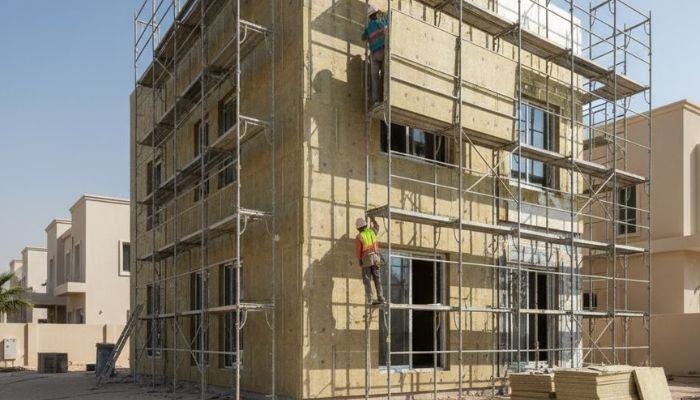
Introduction: Why External Wall Insulation Transforms Buildings
External wall insulation is one of the most impactful investments a building owner can make in Qatar’s extreme climate. By adding continuous insulation to the outside of building walls — rather than inside — external wall insulation eliminates thermal bridges, dramatically reduces heat gain, and transforms a building’s energy performance in ways that interior insulation simply cannot achieve.
At Insugreen, we specialize in complete external wall insulation systems that deliver measurable energy savings, enhanced building durability, and improved aesthetics. Whether you’re constructing a new villa, renovating a commercial tower, or retrofitting an industrial facility, this guide covers everything you need to know about external wall insulation in Qatar.
What is External Wall Insulation?
The Concept Explained
External wall insulation — also called exterior insulation, exterior cladding insulation, or continuous insulation — involves applying an insulation layer to the outside surface of a building’s structural walls, then protecting it with a durable weather-resistant finish system.
**How it differs from cavity or internal insulation:| Type | Position | Thermal Bridges | Best For | |——|———-|—————–|———-| | External Wall Insulation| Outside face | Eliminated | New build + retrofit, max performance | | Cavity Insulation | Inside wall cavity | Partially reduced | Cavity wall construction | | Internal Insulation | Inside face | Remain at slabs, columns | Retrofit where exterior access limited |
Why external is superior:External wall insulation wraps the structure in a continuous thermal blanket, including over the floor slabs, columns, beams, and all structural elements that create thermal bridges when insulation is placed internally. The result is 20-40% better thermal performance than equivalent internal insulation.
External Wall Insulation Systems for Qatar
System 1: EIFS (External Insulation Finishing System)
The most widely used external wall insulation system in Qatar, EIFS combines insulation boards with a multi-layer protective and decorative finish.
EIFS System Components: Layer 1: AdhesivePolymer-modified cement adhesive applied to the structural wall and/or insulation board back. Ensures bonding between substrate and insulation.
Layer 2: Insulation BoardEPS foam boards, typically 40-100mm thick. The primary thermal barrier. See our guide to EPS foam boards for full specifications.
Layer 3: Mechanical Fasteners (if required)Plastic cap fasteners that supplement adhesive attachment, especially in high-wind zones and for upper floors.
Layer 4: Base CoatPolymer-modified cementitious base coat, typically 3-5mm thick, applied over the insulation.
Layer 5: Reinforcing MeshAlkali-resistant fiberglass mesh embedded in the base coat to control cracking and distribute loads.
Layer 6: Finish CoatAcrylic, silicone, or mineral finish coat in a vast range of textures and colors. The visible exterior surface.
EIFS Performance in Qatar Climate:- Heat gain reduction: 50-70% vs. uninsulated wall
- Air tightness improvement: significant
- Waterproofing: excellent when properly installed
- Lifespan: 25-40+ years with normal maintenance
- Maintenance: inspect and touch up every 7-10 years
System 2: Spray Foam External Wall Insulation
Spray polyurethane foam applied directly to exterior walls provides maximum thermal performance with complete air sealing:
Best applications:- Irregular wall surfaces
- Complex architectural geometry
- Areas with numerous penetrations
- Retrofit projects with limited access
- Utility and industrial buildings
Process:1. Surface preparation and masking 2. Spray foam application (50-100mm closed-cell) 3. Cure period (24-48 hours) 4. Apply protective coating or cladding over foam 5. Seal all transitions and penetrations
Performance:- R-value: 6.0-7.0 per inch — highest available
- Complete air sealing
- Moisture barrier (closed-cell)
- No thermal bridges
System 3: Rigid Insulation Board with Cladding
An alternative to EIFS using rigid insulation boards with a separate cladding system:
Components:- EPS or XPS insulation boards (50-150mm)
- Air and moisture barrier
- Cladding support system (rails, brackets)
- Exterior cladding: metal, fiber cement, stone, etc.
Best for:- Commercial and institutional buildings
- Where specific cladding appearance required
- High-impact resistance needs
- Exposed industrial applications
Benefits of External Wall Insulation in Qatar
1. Maximum Energy Savings
External wall insulation delivers the best energy performance because it:
Eliminates ALL thermal bridges:In a typical uninsulated or internally insulated building, heat bypasses insulation through:
- Concrete floor slabs
- Structural columns and beams
- Window and door lintels
- Wall ties and fasteners
- Roof-wall junctions
External wall insulation covers ALL of these, creating a truly continuous thermal barrier.
Quantified savings for Qatar:- 400m² villa without insulation: 5,000-7,000 QAR/month (summer)
- Same villa with external wall insulation: 2,500-4,000 QAR/month
- Annual saving: 30,000-50,000 QAR
- Payback period: 3-6 years
2. Prevents Interstitial Condensation
Qatar’s humid coastal climate creates condensation risk within wall assemblies when warm moist exterior air meets cooled interior surfaces. External wall insulation:
- Keeps the structural wall warm (above dew point)
- Prevents moisture accumulation in wall cavities
- Protects against mold and structural damage
- Extends building lifespan significantly
3. Structural Protection
External wall insulation shields the building structure from:
- Temperature cycling (thermal shock)
- UV radiation degradation
- Rain and moisture penetration
- Physical impact (EIFS base coat)
- Carbonation and chloride attack on concrete
Result:Significantly reduced maintenance costs and extended structural lifespan.
4. No Loss of Internal Space
Unlike internal insulation which reduces room size, external wall insulation:
- Adds insulation without affecting interior dimensions
- Does not disturb occupants during installation
- Allows building to remain in use during retrofit
- Improves internal finishes by eliminating cold spots
5. Complete Building Renewal
EIFS external wall insulation systems transform building appearance:
- Endless texture and color options
- Modern or traditional aesthetic possible
- Covers existing damaged or dated finishes
- Waterproofing improves building durability
- Adds significant property value
External Wall Insulation for Different Building Types
Residential Villas
New Construction:The ideal time to install external wall insulation is during initial construction, when:
- All scaffolding is already in place
- No existing finishes need removal
- Can be fully integrated with waterproofing and window installation
- Lower installation cost than retrofit
- Maximum performance from day one
Typical specification:- 50-75mm EPS + EIFS for walls
- Light-colored acrylic finish coat
- Enhanced at window reveals and base
- Integration with roof insulation system
Retrofit:External wall insulation can be added to existing villas with:
- Minimal disruption to occupants
- Building can remain in use throughout
- Existing finishes covered or removed
- New appearance included in scope
- Energy certificate improvement for resale value
Commercial and Office Buildings
Performance requirements:Commercial buildings often have complex facades with:
- Large glazed areas
- Multiple cladding zones
- Signage integration
- Service penetrations
- High-level access needs
External insulation solutions:- Zone-by-zone installation approach
- Mixed system types (EIFS + panel systems)
- Premium cladding options
- Full facade renewal scope possible
Financial case:Large commercial buildings have the strongest financial case for external wall insulation:
- Large surface area = large energy savings
- High-profile appearance improvement = rental value
- GSAS/LEED certification support
- Corporate sustainability reporting benefits
For guidance on selecting qualified insulation contractors for commercial projects, review our comprehensive guide.
Industrial Buildings
Unique requirements:- High thermal performance for process control
- Durability for industrial environments
- Impact resistance
- Chemical resistance where applicable
- Fire performance requirements
Solutions:- Metal composite panels with foam core
- Spray foam with protective coatings
- High-density EPS with industrial cladding
- Specialized cold storage systems
External Wall Insulation Installation Process
Phase 1: Assessment and Design
Site Survey:- Existing wall condition inspection
- Substrate strength testing
- Moisture assessment
- Thermal imaging to identify problem areas
- Measurement and take-off
Design Development:- Insulation thickness specification
- System type selection
- Finish selection
- Detail design at all transitions
- Structural calculations where required
Material Specification:- EPS or XPS board type and density
- Adhesive and fastener specification
- Base coat and mesh selection
- Finish coat selection and color matching
Phase 2: Surface Preparation
Critical for success:- Remove loose, damaged, or contaminated materials
- Repair structural cracks and defects
- Apply primer where required
- Clean all surfaces
- Mask windows, doors, and services
Wall Types and Preparation:- Concrete block:Clean and prime; high adhesion
- Brick:Fill joints flush; prime; good substrate
- Existing render:Test adhesion; remove if hollow
- Existing tile:Remove (poor adhesion surface)
- Metal or glass:Special adhesive; limited application
Phase 3: Insulation Installation
EPS Board Application:1. Apply adhesive to wall and/or board back 2. Apply boards from base upward, staggered joints 3. Install mechanical fasteners (6-8 per m²) 4. Ensure continuous coverage with no thermal bridges 5. Cut and fit boards neatly at all details
Critical Details:- Base rail prevents boards from sliding
- Window and door reveals fully insulated
- Corners reinforced with corner beads
- Expansion joints at required intervals
- All transitions waterproofed
Phase 4: Base Coat and Mesh
Process:1. Apply base coat to boards 2. Embed reinforcing mesh before coat sets 3. Apply additional base coat over mesh 4. Sand or level as required 5. Allow to cure before finish coat
Mesh Lapping:- Minimum 100mm overlap
- Double mesh at corners and openings
- Continuous coverage throughout
Phase 5: Finish Coat Application
Quality Finish Process:1. Apply primer coat over base coat 2. Apply finish coat to consistent thickness 3. Create texture with roller or trowel 4. Apply color coat (if separate from texture) 5. Inspect for consistency and defects
Finish Options:- Fine sand texture (most popular in Qatar)
- Coarse aggregate texture
- Smooth finish
- Stone effect
- Brick or tile pattern options
Choosing Colors and Finishes for External Wall Insulation
Energy Performance Impact
Light-colored finishes:In Qatar’s intense solar climate, finish color significantly affects wall temperature:
- White/Light finishes:Absorb 20-30% of solar radiation → Wall surface 45-55°C
- Medium colors:Absorb 50-65% → Wall surface 55-65°C
- Dark colors:Absorb 75-90% → Wall surface 65-80°C
Recommendation for Qatar:Always specify light to medium colors (Solar Reflectance Index SRI > 35) to maximize the energy benefit of your external wall insulation investment.
Reflective finish options:- White acrylic: SRI 80-100 (best performance)
- Light grey: SRI 50-65
- Cream/beige: SRI 45-60
- Light terracotta: SRI 30-45
Aesthetic Considerations
Popular textures in Qatar market:- Fine sand finish (smooth, clean appearance)
- Medium aggregate (popular on residential)
- Travertine effect (luxury residential)
- Brick effect (traditional appearance)
- Contemporary smooth (commercial)
Design flexibility:EIFS external wall insulation allows:
- Mixed textures in different zones
- Reveals and shadow lines
- Curved and shaped details
- Integration with decorative foam elements
- Brand colors for commercial buildings
For creative architectural elements that complement your external insulation system, explore our foam decor options.
Maintenance and Longevity
Expected Lifespan
External wall insulation system longevity:- EPS insulation board: 50+ years (permanent)
- Base coat and mesh: 30-50 years
- Acrylic finish coat: 10-15 years (recoatable)
- Silicone finish coat: 20-30 years
- Mineral finish coat: 15-25 years
Total system life:40+ years with normal maintenance
Maintenance Schedule
Annual:- Visual inspection for cracks, staining, damage
- Clean surface if required
- Check base details for moisture infiltration
Every 5-7 years:- Pressure wash entire surface
- Inspect and seal any cracks found
- Assess finish coat condition
Every 10-15 years:- Apply fresh finish coat (acrylic systems)
- Inspect and replace any damaged sections
- Performance assessment
Common Issues and Solutions
Cracking:- Cause: Impact damage, settlement, thermal movement
- Solution: Fill with compatible sealant; recoat affected area
Staining:- Cause: Algae, mold, pollution
- Solution: Biocide treatment; pressure wash; seal
Impact Damage:- Cause: Physical impact at low levels
- Solution: Cut out damaged area; install new insulation and recoat
Moisture Penetration:- Cause: Failed sealant at joints, cracked finish
- Solution: Identify source; seal penetration; dry out; recoat
Cost Guide: External Wall Insulation in Qatar
Typical Pricing (2026)
Residential EIFS (Full System):- 40mm EPS + EIFS: 120-160 QAR/m²
- 60mm EPS + EIFS: 140-180 QAR/m²
- 80mm EPS + EIFS: 160-200 QAR/m²
- Premium finish options: +20-40 QAR/m²
Typical Villa (300m² external wall area):- 60mm system: 42,000-54,000 QAR installed
- 80mm system: 48,000-60,000 QAR installed
Commercial Buildings:- Standard EIFS: 150-220 QAR/m²
- Premium cladding systems: 300-600 QAR/m²
- Spray foam + protective coating: 250-350 QAR/m²
Return on Investment
Villa example (60mm EIFS, 300m² wall area):- Installation cost: 48,000 QAR
- Annual energy saving (walls): 12,000-18,000 QAR
- Payback: 2.7-4.0 years
- 20-year value: 240,000-360,000 QAR
- ROI: 400-650%
Frequently Asked Questions
Can external wall insulation be added to an existing occupied building?
Yes. External wall insulation can be installed while a building is occupied with minimal disruption. Work is done from outside, affecting only the building exterior.
How thick should external wall insulation be for Qatar?
50mm is minimum; 75-80mm is recommended for optimal performance in Qatar’s climate. Above 100mm has diminishing returns in most applications.
Does external wall insulation affect window positions?
Yes, the wall thickness increases, which creates window reveals. This requires attention to detail at window frames and typically improves the appearance of window openings.
How long does external wall insulation installation take?
A typical 400m² villa: 3-5 weeks. Large commercial projects can take 2-6 months depending on height, complexity, and access.
Does external wall insulation require planning permission in Qatar?
Consult with the relevant municipality for your area. Most residential retrofits can proceed with standard building permits.
Will external wall insulation increase my property value?
Yes. Studies consistently show that insulated, energy-efficient buildings command 5-15% premium in sale value and improved rental yields.
Conclusion: Transform Your Building’s Performance
External wall insulation represents one of the highest-return investments available to building owners in Qatar. By wrapping your building’s structure in a continuous thermal blanket, you eliminate thermal bridges, reduce energy consumption by 30-50%, protect the structure from the elements, and transform the building’s appearance — all in a single scope of work.
With payback periods of 3-6 years and energy savings that continue for 40+ years, external wall insulation delivers exceptional lifetime value in Qatar’s climate.
Ready to transform your building?Contact Insugreen today for a free assessment and discover the impact external wall insulation can have on your property.