
Introduction: Cutting Energy Bills with Smart Insulation
Qatar homeowners face one of the world’s highest cooling energy burdens. In summer, air conditioning can consume 70-80% of a household’s electricity — translating to bills of 3,000-6,000 QAR per month for a typical villa. The good news: expanded polystyrene insulation (EPS) combined with smart energy saving strategies can cut those bills by 40-60%.
At Insugreen, we’ve helped hundreds of homeowners and building managers across Qatar dramatically reduce energy consumption through proven insulation solutions. This guide covers everything you need to know about expanded polystyrene insulation and the most effective energy saving methods for Qatar’s climate.
What is Expanded Polystyrene Insulation?
Understanding EPS
**Expanded polystyrene insulationis a rigid foam insulation material made from polystyrene beads that are expanded using steam, then molded into boards, panels, or custom shapes. Widely recognized as the white foam insulation board used across construction globally, EPS delivers excellent thermal performance at an accessible price.
Why EPS is Ideal for Qatar:- High R-value relative to cost
- Moisture-resistant in humid coastal climate
- Dimensionally stable in extreme heat (up to 75°C)
- Lightweight for easy handling and reduced structural load
- Versatile for walls, roofs, foundations, and specialized applications
- 50+ year service life with zero performance degradation
EPS vs. Other Insulation Materials:| Material | R-Value/Inch | Cost | Lifespan | Qatar Suitability | |———-|————–|——|———-|——————-| | EPS Foam Board | 3.8-4.2 | Low | 50+ yrs | Excellent | | XPS (Styrofoam) | 5.0 | Medium | 50+ yrs | Excellent | | Spray Foam | 6.0-7.0 | High | 50+ yrs | Best Performance | | Fiberglass Batts | 2.9-3.8 | Low | 15-25 yrs | Limited (air gaps) | | Mineral Wool | 3.0-3.3 | Medium | 30+ yrs | Adequate |
For premium spray foam solutions that complement EPS systems, explore our spray foam insulation services.
How Expanded Polystyrene Insulation Saves Energy
The Physics of Heat Transfer in Qatar
Qatar’s extreme climate creates three distinct heat transfer challenges that expanded polystyrene insulation addresses:
- Conduction— Heat moving through solid materials (walls, roof, floor) EPS’s closed-cell structure traps air in millions of tiny pockets, creating a highly effective barrier against conductive heat flow.
- Convection— Heat carried by air movement When combined with proper air sealing, EPS systems stop warm outside air from infiltrating conditioned spaces.
- Radiation— Infrared heat from sun-heated surfaces EPS reduces the surface temperature of walls and roofs, cutting the radiant heat load reaching interior spaces.
Energy Savings by Application
Roof Insulation (Highest Impact):In Qatar, the roof receives direct solar radiation for 8-10 hours daily. Without insulation, roof surface temperatures can exceed 80°C, driving massive heat gain into living spaces.
- EPS roof insulation (75-100mm):Reduces roof heat gain by 60-75%
- Annual energy saving:8,000-15,000 QAR for a 400m² villa
- Payback period:2-3 years
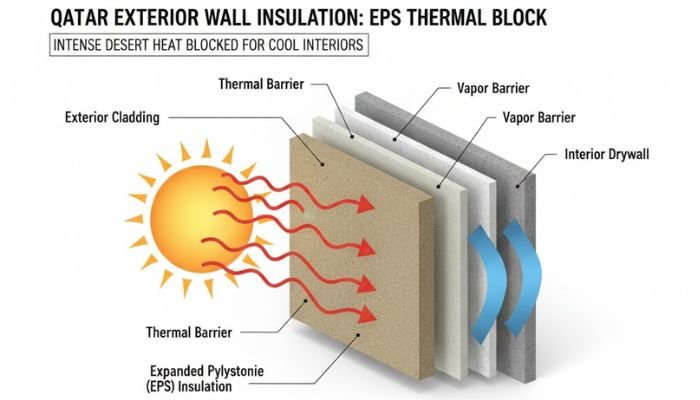
Wall Insulation (Second Highest Impact):Exterior walls are exposed to intense solar radiation and high ambient temperatures throughout the day.
- EPS wall insulation via EIFS (50-75mm):Reduces wall heat gain by 50-65%
- Annual energy saving:6,000-10,000 QAR
- Payback period:3-5 years
Learn how EPS is used in complete exterior wall systems in our guide to EIFS external insulation.
Foundation Insulation:Under-slab and perimeter foundation insulation prevents ground heat from entering lower floors.
- EPS foundation insulation (50mm):Reduces ground floor heat gain by 30-40%
- Annual energy saving:2,000-4,000 QAR
- Payback period:4-6 years
Top 10 Energy Saving Methods for Qatar Homes
Method 1: Roof Insulation with EPS
Why it’s #1:The roof is Qatar’s single biggest source of unwanted heat gain. A dark, uninsulated flat roof can reach 80-85°C in summer, radiating heat downward into living spaces and forcing air conditioners to work overtime.
How to implement:- Apply 75-100mm expanded polystyrene insulation boards on the roof deck
- Use tapered EPS for proper drainage on flat roofs
- Cover with UV-resistant membrane or finish
- Consider white or light-colored reflective finish to reduce solar absorption
Expected results:- Roof surface temperature: reduced from 80°C to 45-50°C
- Ceiling temperature: reduced from 35-38°C to 25-28°C
- AC energy reduction: 25-35% from roof alone
Method 2: External Wall Insulation (EIFS)
Why it works:Exterior wall insulation using EIFS systems with EPS boards creates a continuous thermal break across the entire wall surface, eliminating thermal bridging that defeats interior insulation.
Implementation:- Apply 50-75mm EPS boards to exterior wall surfaces
- Install reinforcing mesh and base coat
- Finish with acrylic texture coat in a light, reflective color
- Seal all joints, penetrations, and transitions
Expected results:- Wall heat gain reduction: 55-70%
- AC energy reduction: 20-30% from walls alone
- Building appearance upgrade included
Method 3: Air Sealing
The hidden energy waster:Studies show that uncontrolled air infiltration accounts for 25-40% of cooling energy waste in Qatar buildings. Even with insulation, gaps around windows, doors, electrical outlets, plumbing penetrations, and structural joints allow hot outside air to continuously infiltrate conditioned spaces.
Air sealing methods:- Spray foam around all window and door frames
- Foam sealant for electrical and plumbing penetrations
- Weatherstripping on all operable windows and doors
- Gaskets on electrical outlet boxes
- Foam or caulk at all structural connections
Expected results:- Air infiltration reduction: 60-80%
- Energy saving contribution: 15-25%
- Improved indoor comfort and reduced dust
Method 4: Window Upgrades and Shading
The glass challenge:Windows are the weakest link in any building envelope. Single or double glazing with no shading allows intense solar radiation to heat interior spaces rapidly.
Energy-saving window strategies:- Upgrade to low-e (low emissivity) double glazing
- Install external shading: blinds, louvers, or overhangs
- Apply solar control window film to existing glass
- Use reflective or tinted glazing for east/west exposures
- Plant shade trees or install pergolas for ground-level windows
Expected results:- Window heat gain reduction: 40-60%
- Energy saving contribution: 10-20%
Method 5: HVAC Optimization
Matching the system to the building:After properly insulating with expanded polystyrene insulation and sealing air leaks, many buildings can operate with smaller, more efficient HVAC systems — or run existing systems more efficiently.
HVAC energy saving methods:- Upgrade to high-efficiency split systems (5-star energy rating)
- Install inverter-driven compressors for variable capacity
- Set thermostats to 24-26°C (not 18-20°C)
- Service and clean filters monthly
- Ensure adequate refrigerant charge
- Consider zoned systems for large homes
Expected results:- Energy reduction from HVAC optimization alone: 20-30%
- Combined with insulation: 50-65% total reduction
Method 6: Roof Color and Reflectivity
Simple but powerful:The color and surface treatment of your roof has a dramatic effect on heat gain. Dark roofs absorb 85-95% of solar radiation; white or reflective roofs reflect 60-80%.
Implementation:- Apply cool roof coating over existing roof surface
- Use white or light-colored reflective membrane
- Install aluminum or white-painted metal cladding
- Choose light-colored finish for EPS roof insulation systems
Expected results:- Roof surface temperature reduction: 20-30°C
- Energy saving contribution: 10-15%
- Combines powerfully with EPS insulation underneath
Method 7: Window Treatments and Internal Shading
Low-cost, immediate savings:Internal window treatments are the lowest-cost energy saving measure with immediate impact.
Effective treatments:- Cellular (honeycomb) blinds: Best insulating value
- Blackout curtains with thermal backing
- Reflective roller blinds
- External perforated roller screens
Expected results:- Energy saving contribution: 5-12%
- Cost: 200-1,000 QAR per window
- Payback: 1-2 years
Method 8: Smart Thermostats and Controls
Behavior and automation:Smart thermostats optimize cooling schedules automatically, reducing energy waste when spaces are unoccupied or during cooler periods.
Features to look for:- Learning algorithms that adapt to your schedule
- Remote control via smartphone
- Occupancy sensors for room-by-room control
- Energy usage reporting and recommendations
- Integration with time-of-use electricity tariffs
Expected results:- Energy saving contribution: 10-15%
- Cost: 500-2,000 QAR per system
- Payback: 1-3 years
Method 9: LED Lighting Upgrade
Heat and electricity reduction combined:Traditional incandescent and halogen lighting converts only 10-15% of energy to light — the rest becomes heat, which your air conditioner must then remove.
LED advantages:- 80-90% less energy than incandescent
- Minimal heat output reduces cooling load
- 25,000-50,000 hour lifespan (10-20 years)
- Excellent light quality options available
- Compatible with all existing fittings
Expected results:- Lighting energy reduction: 80-90%
- Reduced cooling load contribution: 3-8%
- Total energy saving contribution: 5-12%
Method 10: Solar Water Heating
Eliminate electric water heating:Electric water heaters are significant energy consumers in Qatar homes. Solar thermal water heaters can eliminate 70-90% of water heating energy.
System types:- Flat plate solar collectors (most common)
- Evacuated tube collectors (higher efficiency)
- Thermosiphon systems (no pump, low maintenance)
- Pumped systems with storage tanks
Expected results:- Water heating energy reduction: 70-90%
- Annual saving: 2,000-5,000 QAR
- Payback: 3-5 years
Comprehensive Energy Saving Package for Qatar Villas
The Complete Retrofit Strategy
For maximum energy savings, implement multiple methods in combination. Here’s a recommended phased approach:
Phase 1 — High Impact, Quick Payback (Year 1):1. Roof EPS insulation (75-100mm) 2. Air sealing throughout building 3. LED lighting replacement 4. Smart thermostat installation 5. Expected savings: 35-45%6. Investment: 40,000-60,000 QAR7. Payback: 2-3 years Phase 2 — Envelope Completion (Year 1-2):1. EIFS exterior wall insulation 2. Window upgrades or solar film 3. Cool roof coating 4. Additional savings: 15-20%5. Investment: 50,000-80,000 QAR6. Payback: 3-5 years Phase 3 — Systems Optimization (Year 2-3):1. HVAC upgrade or optimization 2. Solar water heating 3. Solar PV panels (if desired) 4. Additional savings: 15-20%5. Investment: 80,000-150,000 QAR6. Payback: 4-6 years Total 20-Year Value:- Total investment: 170,000-290,000 QAR
- Annual savings: 50,000-75,000 QAR
- 20-year savings: 1,000,000-1,500,000 QAR
- ROI: 400-600%
EPS Insulation for Specific Areas of Qatar Homes
Roof Application Guide
Flat Roof (Most Common in Qatar):**
Method A: Under-membrane (New Construction)
- Apply expanded polystyrene insulation boards directly to structural roof deck
- Use tapered EPS for drainage slope (minimum 1:50)
- Apply waterproofing membrane over EPS
- Protect with ballast, pavers, or reflective finish
Method B: Over-membrane (Existing Buildings)
- Apply insulation over existing waterproofing
- Protected membrane assembly
- Weight and puncture resistance important
- XPS or high-density EPS recommended
Method C: Spray Foam Top Coat
- Spray polyurethane foam over existing insulation
- Seals joints and adds R-value
- Creates integral waterproof membrane
- Ideal for existing buildings with poor drainage
**Thickness Recommendations:- Minimum: 50mm (R-value ≈ 8)
- Recommended: 75-100mm (R-value ≈ 12-16)
- Maximum performance: 150mm (R-value ≈ 24)
Wall Application Guide
External Application (Preferred):- EPS boards adhered to exterior wall surface
- Part of complete EIFS system
- Provides continuous insulation
- Aesthetic finish coat included
Internal Application (Retrofit Option):- EPS boards applied to interior wall surface
- Less effective (thermal bridging at floor/ceiling)
- Reduces interior space slightly
- Lower cost than exterior application
Cavity Injection:- Expanding foam injected into hollow block walls
- Minimal disturbance to finishes
- Good for existing buildings
- Best paired with American foam systems
Foundation and Floor Application
Perimeter Foundation:- Apply EPS boards vertically against foundation walls
- Extends from below grade to above grade connection
- Protect above grade portion from physical damage
- Use high-density EPS for soil contact
Under-Slab:- Lay EPS boards on prepared sub-base
- Pour concrete slab over EPS
- Minimum 50mm thickness recommended
- Compressive strength must suit loads
Calculating Your Energy Savings Potential
Quick Assessment Tool
Step 1: Identify your current monthly summer bill (QAR) Step 2: Multiply by the applicable saving percentage:| Current Insulation Status | Savings Potential | |—————————|——————-| | No insulation | 50-65% | | Partial insulation (roof only) | 30-45% | | Partial insulation (walls only) | 35-50% | | Old/degraded insulation | 40-55% | | Good existing insulation | 15-25% |
Step 3: Calculate annual saving:Monthly saving × 12 = Annual saving
Step 4: Simple payback calculation:Investment ÷ Annual saving = Payback years
Example:- Current bill: 5,000 QAR/month
- Saving potential (no insulation): 55%
- Monthly saving: 2,750 QAR
- Annual saving: 33,000 QAR
- Investment in full EPS + EIFS system: 100,000 QAR
- Payback: 3.0 years## Choosing the Right Contractor for EPS Insulation
Selecting the right installation partner is as important as selecting the right materials. Our guide to thermal insulation companies in Qatar covers everything you need to evaluate contractors.
Key Selection Criteria: Experience with EPS systems— Ask for project references Material quality— Verify EPS board specifications and certifications Installation method— Confirm proper adhesive, fastening, and sealing practices Warranty— Material and workmanship coverage Technical knowledge— Can they explain energy savings and R-values? After-sales support— Available for questions and follow-up
For decorative foam elements that can enhance your building’s appearance alongside energy improvements, explore our foam decor services.
Common Mistakes that Reduce EPS Insulation Effectiveness
Insufficient ThicknessInstalling only 25-30mm EPS to save money reduces energy savings by 50-60% compared to the recommended 75-100mm. The incremental cost of additional thickness is small relative to the additional energy savings.
Gaps and DiscontinuitiesAny gap in the insulation layer creates a thermal bridge — a path for heat to bypass the insulation. All joints must be tight, and multiple layers should have staggered seams.
No Air SealingEPS insulation without air sealing delivers only 50-60% of its potential energy savings. Both elements work together.
Poor Quality MaterialsLow-density EPS (below 15 kg/m³) provides inadequate R-values and compresses over time. Always specify minimum density for the application.
Interior-Only ApplicationApplying insulation only to interior surfaces leaves thermal bridges at floor slabs, columns, and beams — significantly reducing effectiveness. Exterior continuous insulation is always preferred.
Ignoring the RoofSome homeowners insulate walls but not the roof. Since the roof receives the most direct solar radiation, skipping roof insulation leaves the biggest energy saving opportunity on the table.
Frequently Asked Questions
What thickness of expanded polystyrene insulation do I need for Qatar?
For roofs: 75-100mm minimum, 150mm for maximum performance. For walls: 50-75mm. For foundations: 50mm is typically adequate.
How much can I realistically save on my electricity bill?
A comprehensive approach (EPS insulation + EIFS + air sealing) typically saves 40-60% in Qatar’s climate. A 5,000 QAR/month summer bill can realistically come down to 2,000-3,000 QAR.
Is EPS insulation safe for use in Qatar’s heat?
Yes. EPS is stable up to 75-80°C in continuous use. Properly installed and protected from UV, it performs reliably in Qatar’s extreme temperatures for 50+ years.
Can I add EPS insulation to my existing villa?
Absolutely. Retrofit options include EIFS exterior application, roof insulation, and cavity injection for hollow block walls. Many clients see 35-50% energy reduction from retrofit projects.
How long does EPS insulation installation take?
Roof insulation: 1-3 days for a typical villa. Wall EIFS: 2-4 weeks depending on size. Foundation: 1-2 days. Full package: 3-5 weeks.
Does EPS insulation require maintenance?
Protected interior or covered exterior EPS requires no maintenance. Exposed exterior surfaces need UV-protective coatings inspected and touched up every 5-10 years.
Conclusion: Start Saving Today
Expanded polystyrene insulation combined with smart energy saving strategies represents the most cost-effective path to dramatically lower energy bills and improved comfort in Qatar homes. With payback periods of 2-5 years and energy savings of 40-60%, the investment pays for itself many times over.
Don’t wait for another summer of 5,000+ QAR electricity bills. Contact Insugreen todayfor a free energy assessment and discover exactly how much you can save with expanded polystyrene insulation.